Difficult Conversations: Should you rehearse first?
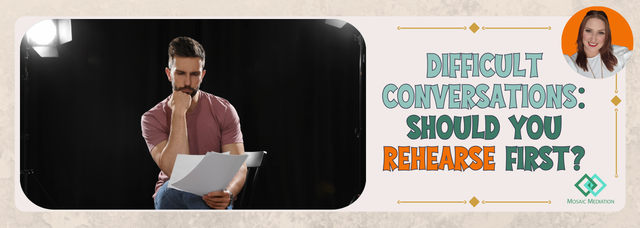
We hear it all the time... "the younger generations won't speak on the phone".
(Although, in fairness, I know many an adult across different generations who also avoid phone conversations if they possibly can.)
With teenagers of my own, I have thought about this and how far I want to push them to do something that feels uncomfortable. As a SEND mediator, in addition to my workplace mediation practice, I am also very aware that for many young people, the aversion to telephone calls goes beyond slight discomfort requiring upskilling or a confidence boost.
I see the benefit of 'live' conversations though. That, unlike with messaging or emails, the speaker has a greater opportunity to convey their intentions and feelings using their tone of voice - body language adds to the communication if involving a videocall or in-person conversation.
In my mediator role, I so frequently see small misunderstandings take place that lead to big issues, so anything which lessens the likelihood of that is a positive in my book.
Telephone calls are like difficult conversations - people just don't want to have them!
Difficult conversations are often avoided because people don't like tension. But, another reason difficult conversations are avoided, just as with telephone calls, is because people are not sure what they will say. Someone may even have tried to hold a tricky yet essential conversation in the past but got thrown off by an unexpected question or response from the other person. Then, this past experience makes them reluctant to go through a similar experience again.
The tip I give out the most when people go through coaching due to wanting to be more confident and effective at holding difficult conversations is to prepare for it.
Most people need some practice to feel confident on the phone. And in the majority of employed roles that involve a lot of telephone use, a company would provide a script so that any client receives a similar experience, regardless of which individual employee answers the phone.
However, some might be concerned that a scripted conversation is likely to feel disingenuous.
So, is there anything wrong with rehearsing a conversation beforehand?
The last few months, I have done a lot of rehearsing! At the end of this week, I will be delivering my first TedX talk and one of the big challenges with speaking at a 🔴TedX event is to deliver the message without any notes. So, I have been memorising and memorising constantly. (Watch Emma Jenkings' recent TEDx talk 'Discovering the Hidden Gold in Conflict' for full video on YouTube.)
At one point, I had done really well at remembering the lines but realised that it sounded 'wooden' and unnatural. I had to take a moment to remember the purpose of what I was saying and how I felt when I first wrote the talk.
There is a need - as with many scenarios - to strike a balance between seeming sincere whilst being prepared for a difficult conversation.
Depending on the complexity of the conversation, you may find it helpful to prepare in greater detail for that conversation. (You can make use of this planning sheet as a resource.)
There are a few simple principles to consider when preparing for a conversation, so that it comes across as genuine and prepared:
- Work your way backwards - Take time before the conversation to consider what you want the other person to have heard when they leave. And, what do you want them to do with what they heard?
- Consider the where, when and how - Timing and context matters. Try to hold a sensitive conversation in a busy place and in a rush and you are unlikely to get a measured response.
- Have something 'up your sleeve' - Consider a few phrases that you can use during the conversation if you need to pause and process, or if you don't have an answer to a question they ask. This is also potentially helpful if you are going into a conversation with someone who has a particularly authoritative or aggressive communication style; meaning you may need to set boundaries.
It is really beneficial to feel confident and clear - and also be genuine - when entering a potentially awkward or difficult conversation. Rehearsal for different outcomes can certainly help with that, especially if you can do that with a someone experienced with navigating such interactions.
Simply working through the above three principles means you are likely to feel more prepared regarding what you would like to say, but also how to navigate the conversation when the other person responds too.
If you would like coaching support to become a more effective communicator or to manage conflict with confidence, send Mosaic Mediation a message. Emma Jenkings is an accredited mediator, conflict and Peaceful Leadership coach, DISC practitioner, and mediator mentor. You can email any questions or queries to enquiries@mosaicmediation.co.uk .