I'm Not There... Yet!

Emma Jenkings • 7 July 2023

The challenges of a successful coaching journey
“Are we nearly there yet?!” – the delightful phrase parents all over the country will be hearing over the next couple of months on the way to their various holiday destinations.


And I get it! Waiting is hard. (Harder for some more than others). I naturally look for the next thing to happen and if it takes longer than expected, I have different techniques to keep me measured and calm.


What is so unsettling about waiting? I think we generally like to know what is happening, what our role is and what might happen next. It offers certainty and a steady foundation for making decisions and responding appropriately to a situation. The waiting period doesn’t provide that – it’s transitional, changeable, and ambiguous. It’s the uncomfortable ‘in-between’.


Waiting also suggests that we are not in control of the situation – we are waiting for the situation to change or for someone else do doing something. Though some people prefer not to be the one taking charge, very few of us like our lives to be completely reliant on external factors.


I was thinking about this recently, when reflecting on the progress of my coaching clients. They don’t come to me at their first realisation of needing support in assertiveness, communication, or leadership skills (let’s face it, not many do ask for help straight away!).


They come to me after a few instances of feeling ill-equipped to handle a tricky conversation or noticing a pattern of self-doubt or overwhelm. Initially, most clients are tentative about their goals for coaching because they aren’t really sure what is achievable.


Then, as their initial goals start to be fulfilled, their minds are open to bigger possibilities. And yet…

…Then comes the frustration with themselves - that they haven’t conquered this ‘assertiveness’ skill fully yet. They now see what is possible and so this in-between stage can be really uncomfortable.


Coming from someone who finds it hard to wait… the uncomfortable ‘in-between’ stage is a key part of the process. Like many skills in life, it takes time and persistence to become an assertive communicator, who can so whilst creating peaceful, boundaried and authentic relationships.


The in-between stage is where you are highly cognizant in your interactions. It’s when you will notice the small details in someone’s body language, tone of voice or facial expression. It’s when you are on the lookout for potential ‘hot buttons’ or external factors which could improve the outcome of a conversation.


This uncomfortable in-between is necessary if you don’t just want to learn the basics of communication. Or, to prevent from becoming someone who knows the actions but doesn’t really get the purpose of the skills.


My belief is that to become an effective and confident communicator, you need to:

a)    START by wanting it (which is why I don’t ever try to convince someone they need coaching in this area)

b)    PERSIST through the frustrations of the ‘in-between’ of having made progress but wanting to achieve more!

c)     EMBED the habits of noticing, adapting and being proactive in interactions – keeping putting those learnings into practice.

d)    EMBODY the habits until they become instinctive.


This final stage of the process is the sweet spot of communication skills. Just like when you are learning to drive… checking all the mirrors or finding the clutch biting point takes up so much brain capacity. And you’re certainly not able to hold a meaningful conversation during a manoeuvre!


In building assertiveness, communication, or conflict management skills, when you have the motivation to ask for support, you have persisted, you embed new habits and now they are part of your instinctive responses… You will then feel calm enough to further deepen those conversations, confident enough to initiate interactions, and skilled enough to handle the unpredictable.


So, you may not ‘be there’ yet, but if you have plotted the sat nav correctly and you stay on track, you will be. So, just remind your inner 7-year-old to be patient. They will know when you have arrived!


Emma Jenkings is an accredited workplace mediator and a trained conflict coach, DISC practitioner, MHFA and communication skills trainer. Find out more about COACHING or E-LEARNING for assertiveness skills HERE.
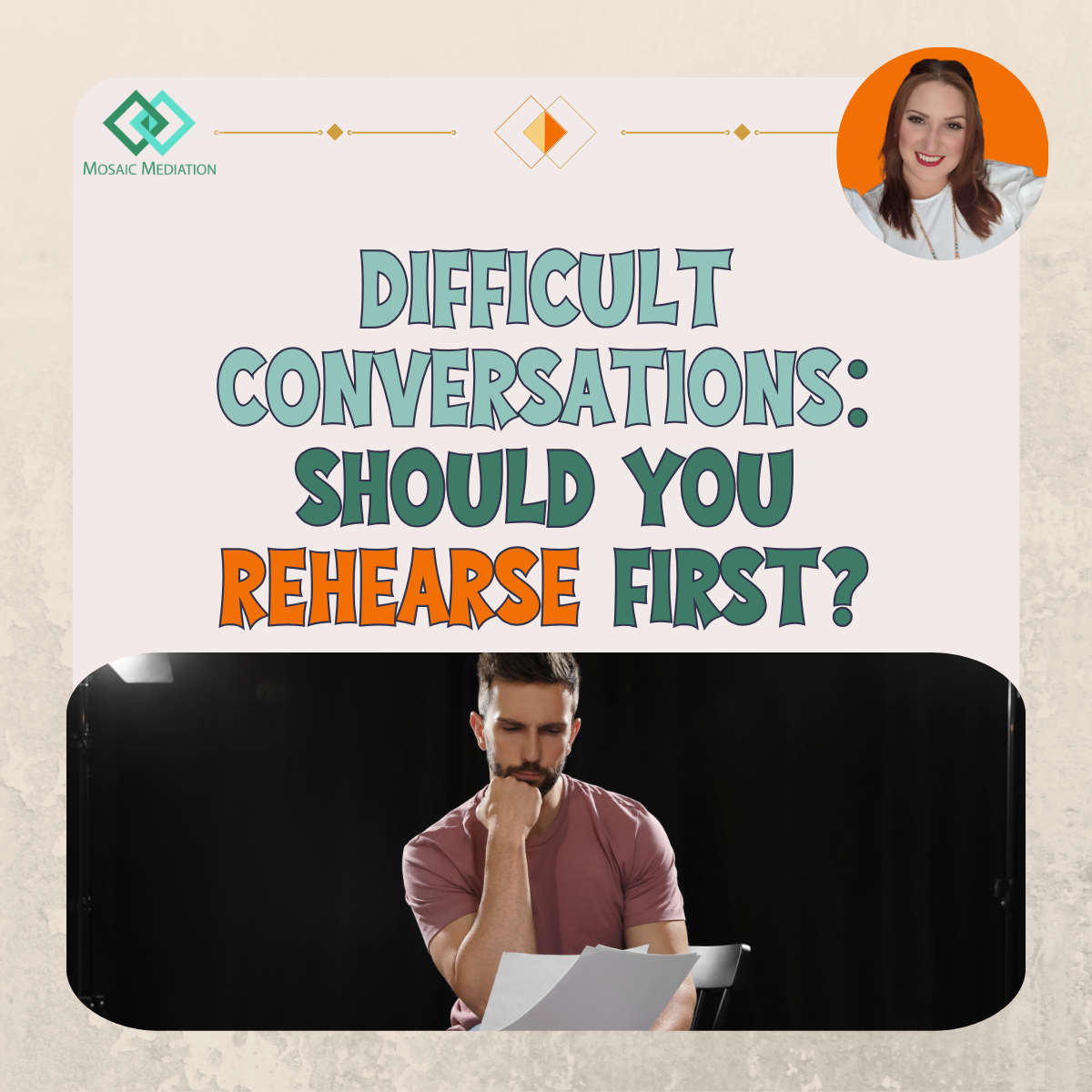
Man looking at a script. Title is 'Difficult Conversations: Should you rehearse first?'
by Emma Jenkings 2 September 2026
We hear it all the time... "the younger generations won't speak on the phone" . (Although, in fairness, I know many an adult across different generations who also avoid phone conversations if they possibly can.) With teenagers of my own, I have thought about this and how far I want to push them to do something that feels uncomfortable. As a SEND mediator, in addition to my workplace mediation practice, I am also very aware that for many young people, the aversion to telephone calls goes beyond slight discomfort requiring upskilling or a confidence boost. I see the benefit of 'live' conversations though. That, unlike with messaging or emails, the speaker has a greater opportunity to convey their intentions and feelings using their tone of voice - body language adds to the communication if involving a videocall or in-person conversation. In my mediator role, I so frequently see small misunderstandings take place that lead to big issues, so anything which lessens the likelihood of that is a positive in my book. Telephone calls are like difficult conversations - people just don't want to have them! Difficult conversations are often avoided because people don't like tension. But, another reason difficult conversations are avoided, just as with telephone calls, is because people are not sure what they will say. Someone may even have tried to hold a tricky yet essential conversation in the past but got thrown off by an unexpected question or response from the other person. Then, this past experience makes them reluctant to go through a similar experience again. The tip I give out the most when people go through coaching due to wanting to be more confident and effective at holding difficult conversations is to prepare for it . Most people need some practice to feel confident on the phone. And in the majority of employed roles that involve a lot of telephone use, a company would provide a script so that any client receives a similar experience, regardless of which individual employee answers the phone. However, some might be concerned that a scripted conversation is likely to feel disingenuous. So, is there anything wrong with rehearsing a conversation beforehand? The last few months, I have done a lot of rehearsing! At the end of this week, I will be delivering my first TedX talk and one of the big challenges with speaking at a 🔴TedX event is to deliver the message without any notes. So, I have been memorising and memorising constantly. At one point, I had done really well at remembering the lines but realised that it sounded 'wooden' and unnatural. I had to take a moment to remember the purpose of what I was saying and how I felt when I first wrote the talk. There is a need - as with many scenarios - to strike a balance between seeming sincere whilst being prepared for a difficult conversation. Depending on the complexity of the conversation, you may find it helpful to prepare in greater detail for that conversation. (You can make use of this planning sheet as a resource . ) There are a few simple principles to consider when preparing for a conversation, so that it comes across as genuine and prepared: Work your way backwards - Take time before the conversation to consider what you want the other person to have heard when they leave. And, what do you want them to do with what they heard? Consider the where, when and how - Timing and context matters. Try to hold a sensitive conversation in a busy place and in a rush and you are unlikely to get a measured response. Have something 'up your sleeve' - Consider a few phrases that you can use during the conversation if you need to pause and process, or if you don't have an answer to a question they ask. This is also potentially helpful if you are going into a conversation with someone who has a particularly authoritative or aggressive communication style; meaning you may need to set boundaries. It is really beneficial to feel confident and clear - and also be genuine - when entering a potentially awkward or difficult conversation. Rehearsal for different outcomes can certainly help with that, especially if you can do that with a someone experienced with navigating such interactions. Simply working through the above three principles means you are likely to feel more prepared regarding what you would like to say, but also how to navigate the conversation when the other person responds too. If you would like coaching support to become a more effective communicator or to manage conflict with confidence, send Mosaic Mediation a message . Emma Jenkings is an accredited mediator, conflict and Peaceful Leadership coach, DISC practitioner, and mediator mentor. You can email any questions or queries to enquiries@mosaicmediation.co.uk .
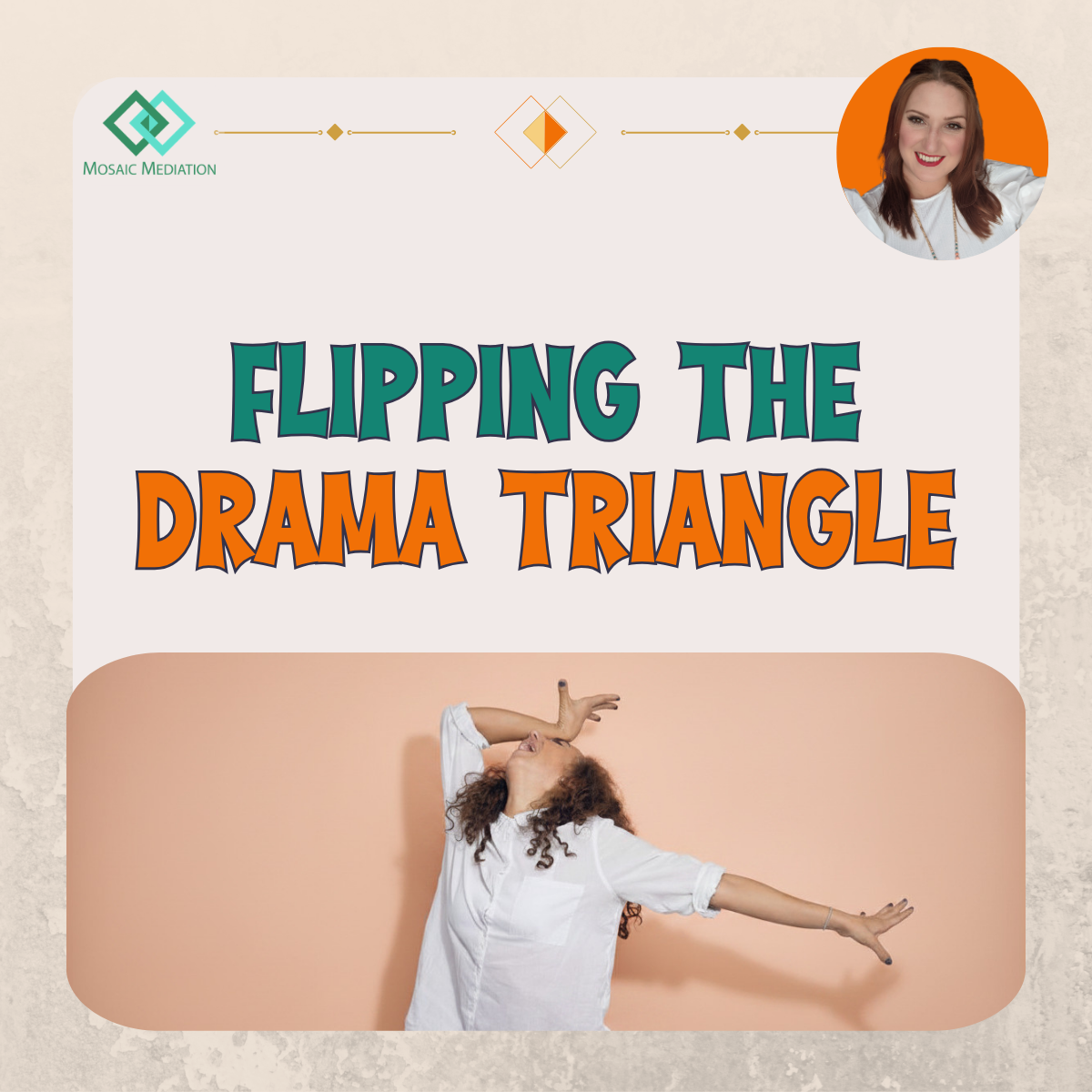
'Flipping the Drama Triangle' - article by Emma Jenkings, Mosaic Mediation
by Emma Jenkings 8 July 2026
Find out how the drama triangle roles show up in different scenarios – including the workplace - and how to break out of the roles that lead to conflict escalation.
'Keyboard Chaos: Problematic Communication'. Image: Hand typing on a keyboard.
by Emma Jenkings 18 May 2026
Written communication can cause a whole range of issues within a workplace. Discover the consequences of problematic messages between colleagues and tips to improve.
'Ten years of you, my peace and I' - Mosaic Mediation blog
by Emma Jenkings 3 March 2026
Explore how mediation supports mental health in the workplace. Mosaic Mediation reflects on 10 years of conflict resolution and the need to "manage your own peace".
'Communicating without words' - Mosaic Mediation
by Emma Jenkings 13 November 2025
Non-verbal communication can account for up to 93% of communication. Therefore, it is important to understand the impact of non-verbal communication on interactions.
The Power of Yet - Mosaic Mediation - Man looking at finish line flag.
by Emma Jenkings 17 September 2025
It isn't easy to be in that space between desire and the outcome. Hope is the determining factor that motivates people towards the goal of 'resolution' in mediation.
What a difference a day makes - Mosaic Mediation
by Emma Jenkings 22 July 2025
Workplace mediation is a process that can make a tangible difference in just one day of mediation. It is the start of resolving issues and improving relationships.
What is underneath the behaviour? - Mosaic Mediation
by Emma Jenkings 2 June 2025
They say that only a minor amount of communication is verbal - yet what if both non-verbal communication and external behaviours are still only part of the story? This article explores what leads to misunderstandings and miscommunication.
A problem shared... Mosaic Mediation
by Emma Jenkings 28 April 2025
While gossip can feel good at the time, it rarely makes a beneficial difference to a situation. Conflict coaching is a tool that is becoming more commonly used, as individuals and organise recognise the positive impact only a few conflict coaching sessions have on the individual and the dispute situation.
Show More